Abandoned House Icons: A Versatile Tool for Modern Design
When it comes to visual storytelling, icons play a crucial role in conveying complex ideas quickly and effectively. Among the many icon themes available, Abandoned House Icons stand out as a powerful symbol of decay, mystery, and nostalgia. These icons are not only visually compelling but also highly functional across a wide range of design projects.
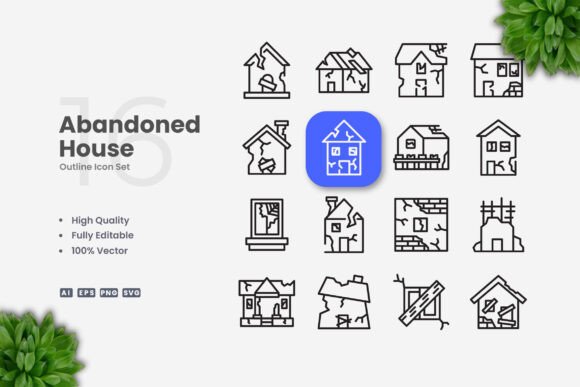
Designed with simplicity and clarity in mind, Abandoned House Icons are ideal for websites, mobile apps, books, social media, infographics, flyers, print materials, banners, posters, and more. Their clean lines and minimalistic approach ensure they fit seamlessly into any design aesthetic while maintaining strong visual impact.
Why Choose Simple and Clean Icon Design?
Simple and clean icon design has become a cornerstone of modern graphic design. This style prioritizes clarity and ease of recognition, making it perfect for users who need to quickly understand the meaning behind an image. For Abandoned House Icons, this approach ensures that the essence of abandonment and decay is communicated without unnecessary complexity.
These icons are often used in thematic designs such as horror games, historical documentaries, or real estate listings showing properties in disrepair. The minimalist design allows for easy integration into various platforms and formats, ensuring consistency across different mediums.
One of the key advantages of simple and clean icon design is its adaptability. Whether you're creating a website layout, a mobile app interface, or a print advertisement, these icons can be resized, recolored, or modified to suit your specific needs. This flexibility makes them a valuable asset for designers working on diverse projects.
Key Features of Abandoned House Icons
The Abandoned House Icons set comes with a range of features that make it a top choice for professionals and hobbyists alike. Each icon is crafted with high-quality design standards, ensuring sharp details and consistent quality across all formats.
- 100% Vector Format: The icons are created using vector graphics, allowing for unlimited scalability without loss of quality. This means they look crisp and clear at any size, from small app buttons to large billboards.
- 100% Customizable: Users have full control over the design elements, including color, stroke weight, and shape adjustments. This level of customization ensures that the icons can be tailored to match any brand or project requirement.
- Editable Stroke: The ability to modify stroke weight gives designers greater flexibility in adjusting the visual weight of the icon. This feature is especially useful when aligning icons with other design elements or when creating variations for different contexts.
- Easy Drag and Drop: The file format supports quick and intuitive use in most design software, streamlining the workflow for designers who want to focus on creativity rather than technical setup.
The package includes multiple file types to suit different needs. Source files in Adobe Illustrator (AI) allow for detailed editing, while EPS Version 10 ensures compatibility with a wide range of applications. SVG files provide scalable vector graphics that work well on digital platforms, and PNG files with transparency offer convenience for web use. A Readme.txt file is included to guide users through the setup process and answer common questions.
Practical Applications of Abandoned House Icons
Abandoned House Icons are not limited to a single industry or application. Their versatility makes them suitable for a wide range of projects, from entertainment to education. In the gaming industry, for example, these icons can be used to represent haunted locations, ruins, or hidden areas within a game world. Their visual appeal adds depth and atmosphere to the overall experience.
In the realm of social media, Abandoned House Icons can enhance content by providing a visual cue for posts related to history, mystery, or urban exploration. They can be used as profile pictures, cover images, or illustrations in blog posts and articles. Their clean design ensures they remain professional while still capturing attention.
For print materials such as flyers, posters, and banners, these icons add a touch of sophistication and intrigue. They can be used to highlight events, promotions, or themed campaigns. When paired with text, they create a compelling visual narrative that draws viewers in and encourages engagement.
Web designers also benefit from the use of Abandoned House Icons. Whether designing a portfolio site, a real estate listing, or a creative agency’s homepage, these icons can be integrated into navigation menus, section headers, or background elements. Their simplicity ensures they do not overwhelm the design but instead complement it with subtle visual interest.
Designing with Abandoned House Icons
When incorporating Abandoned House Icons into a design project, it's important to consider how they will interact with other elements. The icons should be placed in a way that enhances the overall composition without disrupting the flow of information. This may involve adjusting their size, position, or color to achieve balance and harmony.
One effective strategy is to use a consistent color palette that aligns with the project's theme. For example, a muted gray or brown tone can evoke a sense of decay, while a darker shade might emphasize mystery or danger. Experimenting with different hues can help find the right tone for the intended message.
Another consideration is the context in which the icons will be used. If they are part of a larger set of icons, ensuring visual consistency is key. This includes matching stroke weights, line thickness, and overall style to maintain a cohesive look across the entire design.
Finally, testing the icons in different environments is essential. Viewing them on various devices, screens, and backgrounds can reveal how they perform in real-world scenarios. This step helps identify any potential issues and ensures the icons deliver the desired impact regardless of the platform or medium.